
One To One Training — A personal, adaptive approach to Movement
Rachel offers bespoke one-to-one training shaped around you — how you move, how you respond to challenge, and what you’re working towards. Her approach draws from established movement lineages alongside contemporary biomechanical understanding, allowing the work to unfold gradually rather than follow a fixed programme.
An initial discovery session creates space to explore your movement history, current needs, and intentions. From there, sessions evolve responsively — sometimes physically demanding, sometimes investigative or refining — always guided by close attention to how your body and attention respond in the moment.
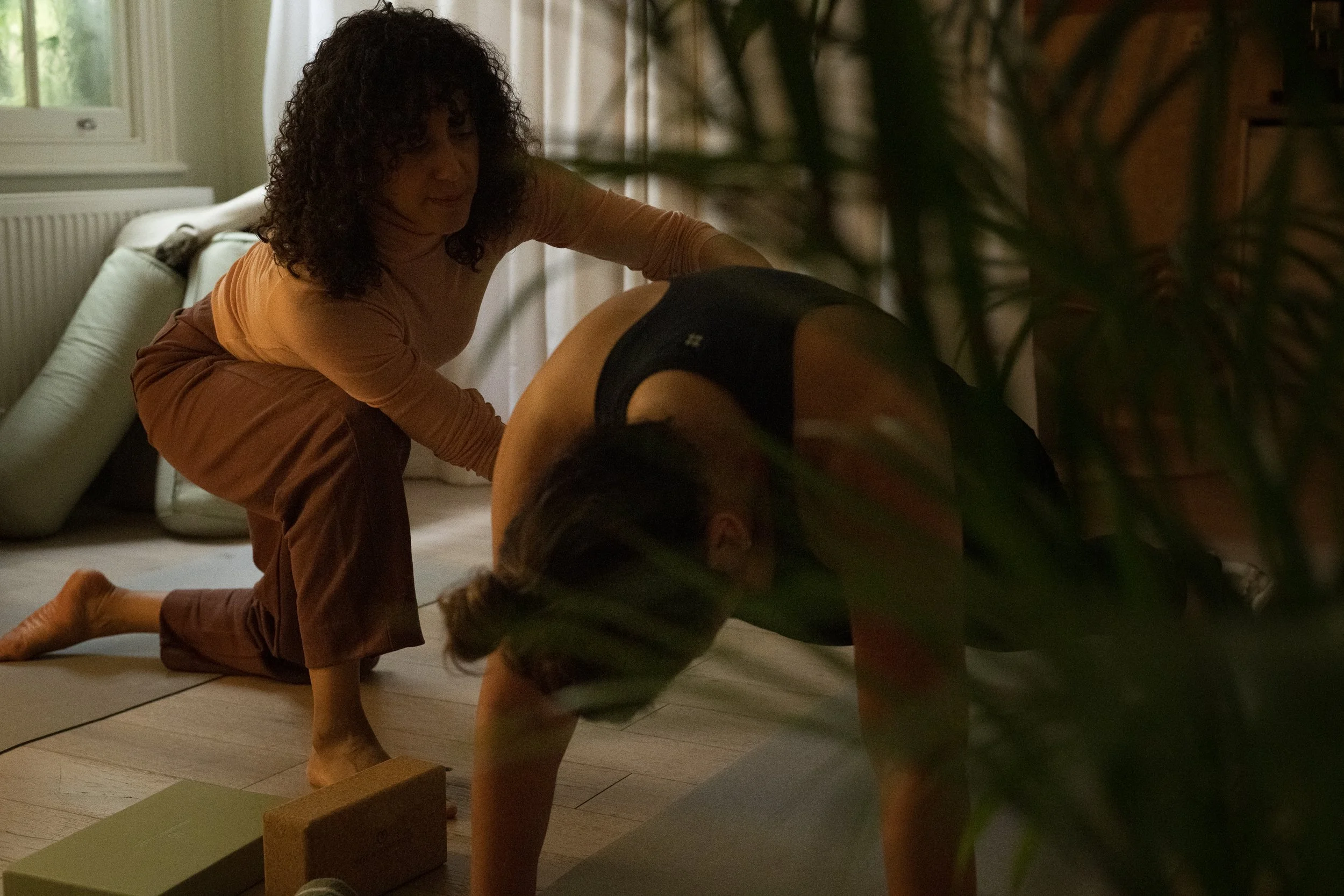
Yoga — movement, breath, and internal regulation
Rachel’s yoga background spans vinyasa and hatha traditions, with influences from kundalini and breath-based practices. She approaches yoga as a three-dimensional practice — working simultaneously with movement, breath, attention, and internal regulation.
Postural practice provides the structure: flowing sequences, held shapes, and transitions that help you build coordination and clarity. Within that structure, attention is placed on how you breathe, how your nervous system responds, and how you meet sensation and effort. This supports learning how to regulate intensity, recover, and stay present rather than pushing or withdrawing.
Breathwork and pranayama are used to support physiological balance and focus, helping you develop capacity from internal organisation rather than external force. Yoga becomes a way of refining how you listen, respond, and organise yourself — not just how you move, but how you inhabit the practice as a whole.
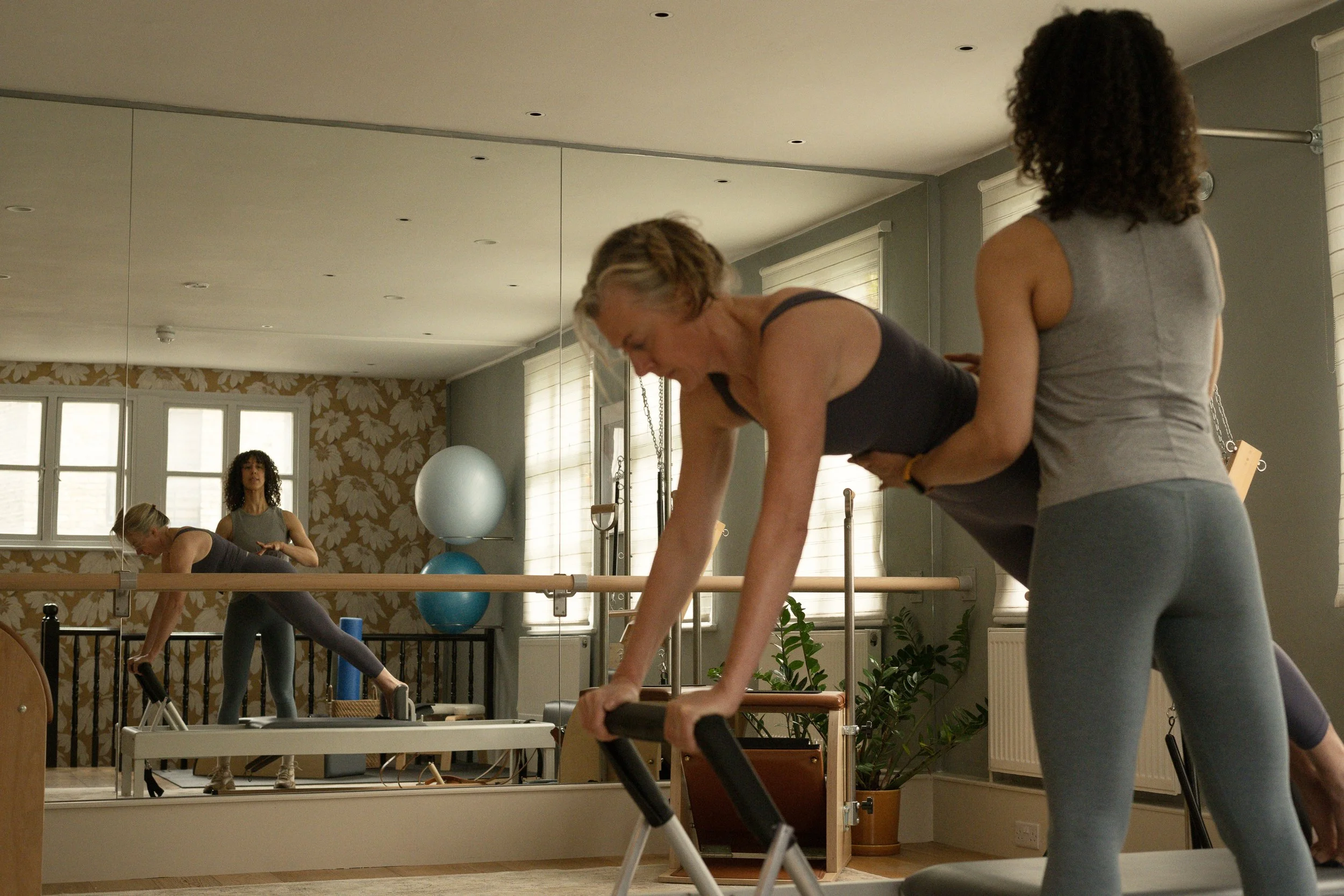
Pilates — classical foundations, intelligently applied
Pilates work is grounded in the classical tradition of Joseph Pilates, including mat and equipment-based practice and the original organising principles of the method. Rachel applies these foundations to support clarity, precision, and integration in how you move.
The focus is on organisation — how movement is initiated, supported, and distributed across joints and muscle groups. Through this work, you learn how to access strength without excess effort, coordinate from the centre, and use your body as an integrated whole rather than a collection of parts.
Pilates becomes a way of developing efficiency and adaptability, helping movement feel more coherent and available both inside and outside the studio.
Biomechanics — understanding how you move
Biomechanics provides the framework for how the work is structured and adapted. Rather than isolating muscles or repeating standard exercises, Rachel looks at how joints, patterns, breath, and coordination work together.
This approach helps identify inefficiencies, habitual patterns, or blind spots in how you move, and supports more efficient, resilient organisation over time. It’s about learning how you move — and how small adjustments can have wide-reaching effects across your whole system.
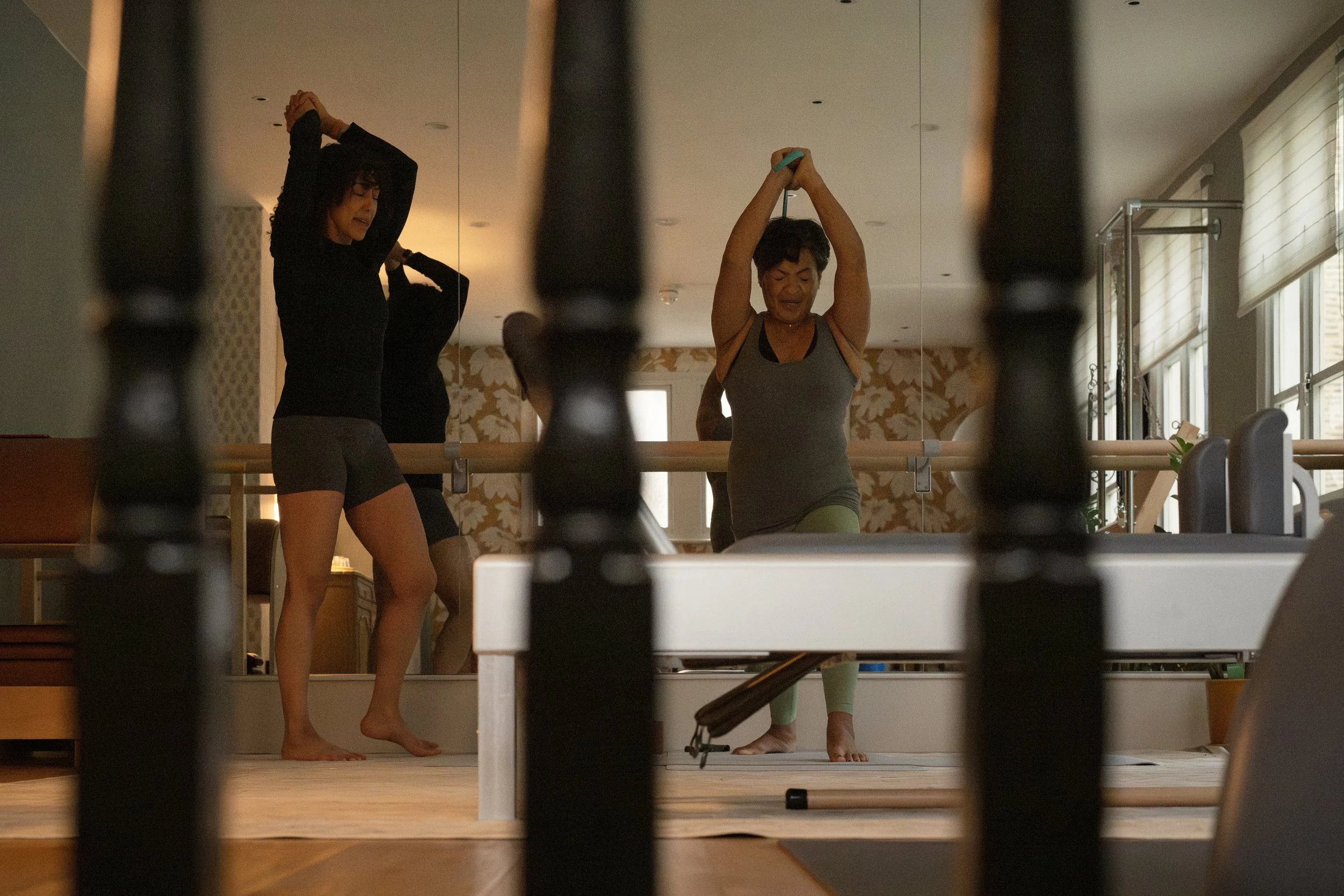
Mind and Movement — how you meet the work
Alongside physical practice, sessions naturally explore how you relate to movement: how you meet challenge, uncertainty, effort, or sensation. Attention is given to patterns of thinking, pacing, and self-organisation as they show up through movement.
This cognitive and perceptual layer runs alongside the physical work, informing how practices are introduced, progressed, or refined. Over time, this supports greater choice, adaptability, and confidence — not only in how you move, but in how you work with yourself more broadly.
Ways we can work Together.
There are several ways to work together, depending on what would best support you.
Some people choose to work over a defined period of time, focusing on a particular area — such as recovering from an injury, refining a movement pattern, or preparing for a specific physical demand. This is often supported through a block of sessions, allowing the work to build with continuity and focus.
Others choose ongoing one-to-one training as a regular practice. This typically involves weekly or more frequent sessions, supported through membership options, and allows the work to develop and adapt over time.
The Discovery Session is the starting point. It gives us space to understand what you’re working towards and to decide together how to continue.
Work with Rachel.
If you’re interested in working together, start with a Discovery Session. This session gives us time to meet, work together, and see whether one-to-one training at Atelier 108 is the right fit for you.
There’s no requirement to continue beyond this session. It’s simply the starting point for the work..
You can also email me here with any questions.