
Structure holds,so story can unfold.
I work with the body as both structure and story. I am interested in the ways physical practice and inner inquiry inform one another. Over time, my work has evolved into an integration of movement training, somatic awareness, and psychological frameworks — supporting a more conscious relationship to pattern, adaptation, and change.
This work takes place primarily in a one-to-one setting. I have come to value this format not only for its depth of attention, but for the quality of relationship it makes possible. In direct exchange, movement and inner inquiry unfold with greater nuance — patterns become visible, shifts are felt, and the work responds to what is present while remaining attentive to what is seeking development.
The process begins with a structured discovery session. This first meeting establishes the direction of the work — clarifying areas of focus, observing movement patterns, and identifying where greater strength, coordination, or awareness may be needed. From there, sessions build progressively, integrating technical training with attentive exploration.
Embodied Practice. Movement practice forms the ground of my work. I draw from yoga, Pilates, biomechanics, breathwork, and somatic training to support a responsive and adaptable relationship with the body. Sessions are shaped through careful observation — refining alignment, strength, coordination, and breath in relation to the individual in front of me.
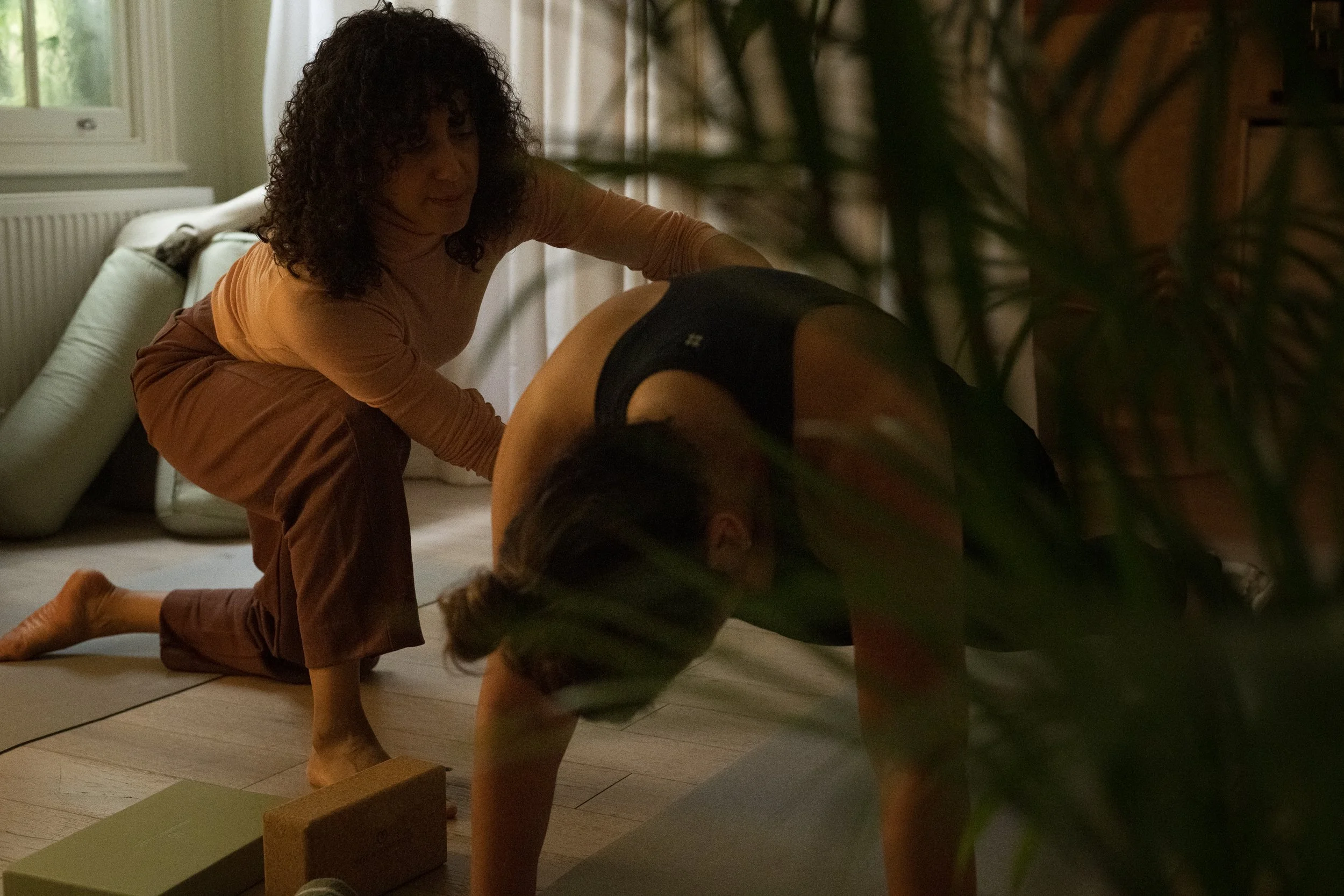
Yoga — movement, breath, and internal regulation
Within this work, yoga is approached as a three-dimensional practice integrating movement, breath, and attention. Postural sequences provide structure through which internal regulation can be observed and refined. Breath is not secondary to movement but woven throughout, shaping pacing, sensation, and continuity within the body. The emphasis remains on awareness and steadiness rather than form alone..
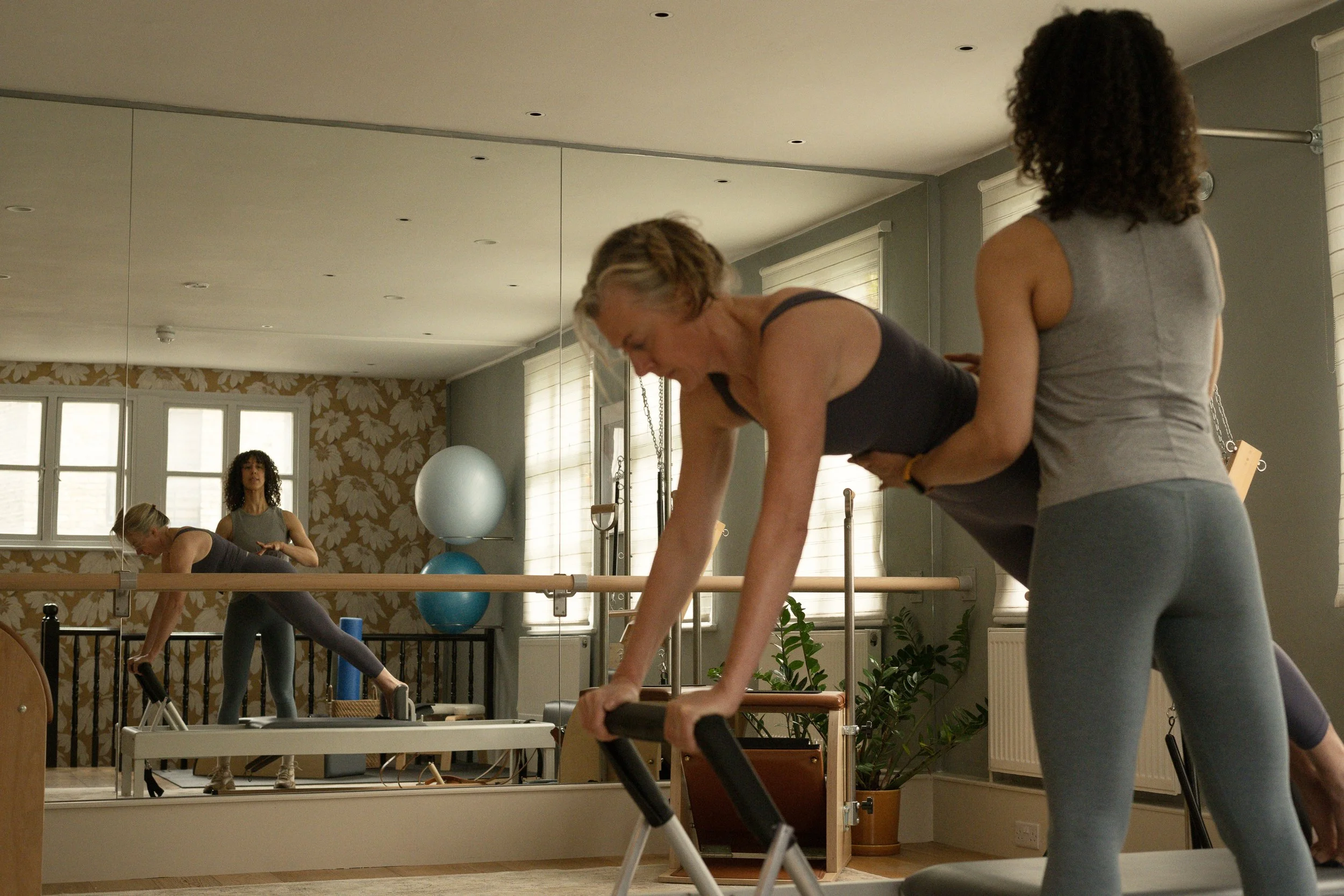
Pilates — classical foundations, intelligently applied
Within this work, Pilates functions as a language for organising movement around the centre of the body. It provides a framework through which stability, coordination, and power can be accessed and distributed through the whole system. Rather than focusing on exercises in isolation, the material is used to develop resilience and stamina in the ranges and patterns we rely on every day — from rolling and rising to carrying load and sustaining effort. In this way, classical foundations become a practical means of strengthening how the body supports itself in ordinary life.
Biomechanics — understanding your unique language
Within this work, biomechanics offers a way of understanding how the body organises itself in movement. It brings attention to subtle, often unnoticed patterns — how weight is distributed, how joints prefer to move, and how effort is layered through the system. Through this awareness, movement can be refined at a neural level, restoring efficiency and clarity where compensation has accumulated over time. The process is less about correction and more about recognising and reorganising how the body speaks.
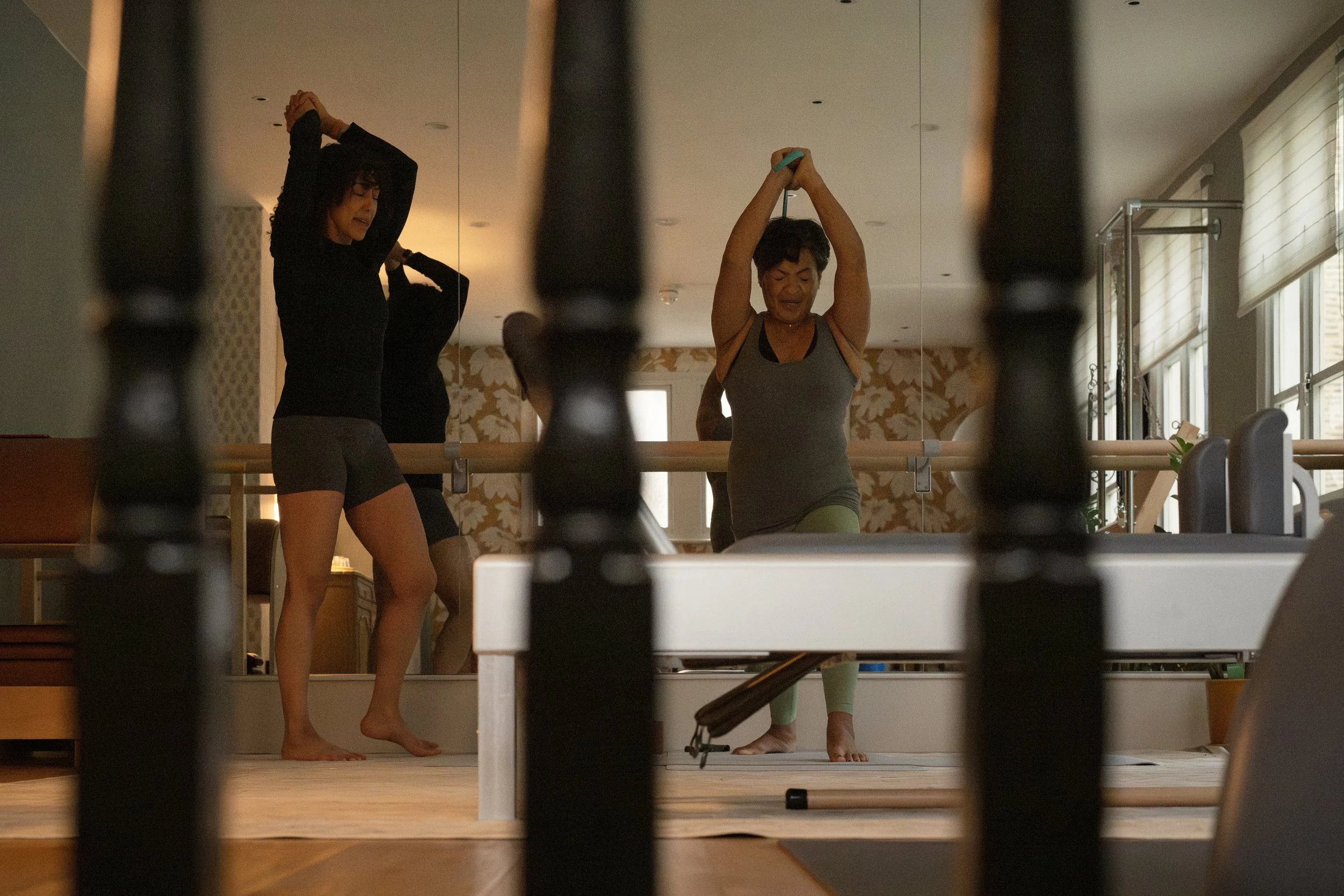
Parts and Patterns. Just as the body develops patterns of movement, the psyche develops patterns of adaptation. Alongside embodied practice, I work with psychological frameworks that help make sense of recurring patterns in behaviour, attention, and relationship. Drawing primarily from Internal Family Systems and the Enneagram, this aspect of the work explores how identity structures, adaptive strategies, and internal dynamics shape the way we move through the world. The aim is not analysis for its own sake, but greater awareness of how these patterns organise experience.

The Enneagram in Practice
The Enneagram is a dynamic map of personality patterns, core motivations, and instinctual responses. It offers a descriptive framework for understanding why we think, feel, and behave in particular ways, and how these tendencies show up through the body as well as the mind.
In this work, the Enneagram is used as a lens for recognising habitual internal structures rather than as a prescriptive personality label. Every type tends to organise attention, motivation, and response patterns in characteristic ways, and these patterns can shape how we approach movement, effort, rest, and challenge.
Exploring these patterns supports awareness of how motivation, practice style, pacing, and engagement with the body are influenced by deeper tendencies. This can illuminate, for example, how a particular way of training either aligns with one’s natural style or creates unnecessary tension, overwhelm, or avoidance — helping shift from patterned reactivity toward more conscious presence.
Rather than focusing on type as a fixed category, this enquiry attends to how recurrent strategies and responses organise experience — offering language and perspective that enrich movement practice, self-awareness, and the capacity to meet challenge with steadiness and clarity.
Internal Family Systems - A Somatic Lens
Internal Family Systems recognises that we are not singular in our experience. Most of us can sense this intuitively — the part that wants the glass of wine and the part that wants to wake early; the part that braces and pushes through, and another that feels tired or unseen. Rather than treating these inner experiences as contradictions to eliminate, this framework approaches them as distinct aspects of the self, each with its own history, role, and intention.
In this work, these parts are encountered not only through thought, but through the body. Tight shoulders, a held chest, a collapsed posture, persistent tension or fatigue can sometimes reflect parts working hard to protect, manage, or contain something. By meeting these expressions with attention rather than correction, it becomes possible to understand what they have been carrying. Over time, relating to these parts with steadiness and compassion can allow patterns to soften and reorganise. The process can be deeply healing — not dramatic, but gradual — as different aspects of the self come into clearer relationship with one another.
What is often described as “embodiment” becomes practical and experiential — a quieter, more integrated way of inhabiting oneself.
Before this became a practice for others, it was a way of making sense of my own experience.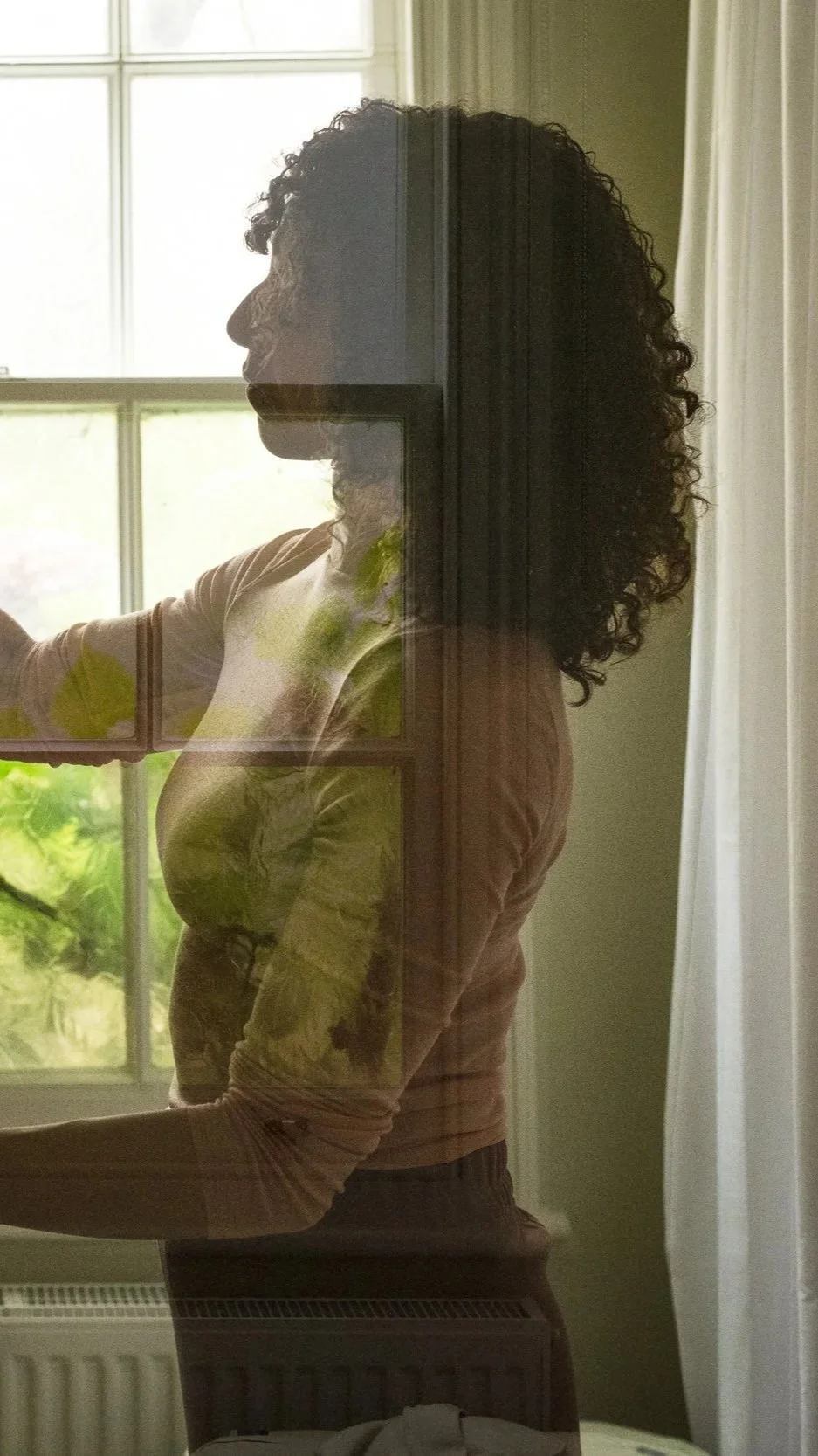
Where It Began
From the bustle and bright lights of New York City to extended periods of study in India, my path has unfolded through movement, culture, and contemplative practice. Movement has been part of my life for as long as I can remember. I began dancing at a young age, and it quickly became more than discipline — it was expression, refuge, and a way of understanding myself and the world around me.
Training and working as a dancer in New York expanded that relationship. It was there that I was first introduced to yoga and Pilates, practices that shifted my understanding of movement beyond performance. They offered new ways to explore strength, awareness, breath, and internal experience — not simply as techniques, but as modes of listening.
Deepening the Practice
Spending extended time in India marked another significant turning point. Immersed in yoga study and contemplative traditions, I encountered movement as a vehicle for attention and regulation. Breathwork, mantra, and subtle practices reshaped how I understood the body — not as something to shape or perfect, but as an instrument for insight and integration.
Over time, my work continued to evolve through teaching, mentoring, and coaching. Alongside sustained study of classical Pilates, biomechanics, and movement science, I trained in the Enneagram and Internal Family Systems, deepening my interest in how psychological patterns and physical organisation intersect.
In Relationship
After many years of teaching groups, I found myself increasingly drawn to working one-to-one. It is within relationship that a deeper willingness often emerges — a readiness to explore what lies beneath habit and performance.
For me, this relational context is not simply logistical; it is foundational. It creates the conditions for trust and continuity, where subtle shifts can be noticed, patterns can be met with care, and the work can unfold with greater honesty and depth.
A home for the work
Atelier 108 grew out of years of working one-to-one in private residences. I noticed that the familiarity of home often created a particular openness — a willingness to explore more deeply. At the same time, domestic environments carried their own distractions and constraints.
Drawing from my background in interior design, I wanted to create a space that retained the intimacy and warmth of home while offering the focus and infrastructure required for detailed and varied practice. The studio was conceived as an extension of the work itself — considered, functional, and intentionally scaled for one-to-one engagement.
Atelier 108 now serves as the physical home of this practice in London.
